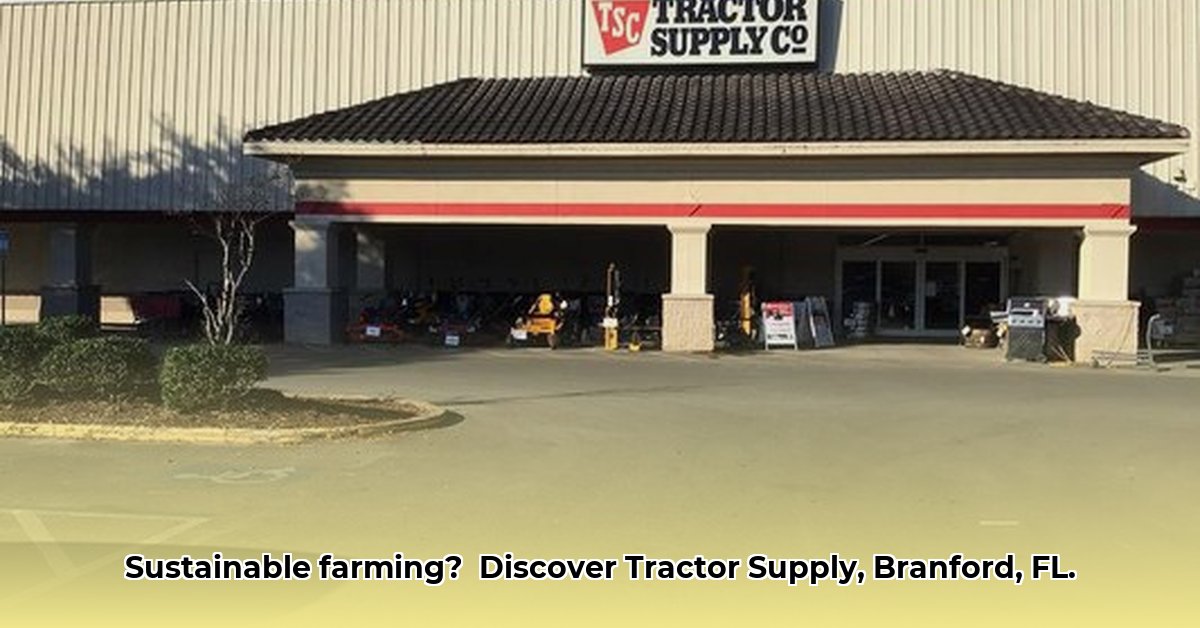
Tractor Supply Branford Florida: A Local Hub for Sustainable Farming?
Tractor Supply Company (TSC) in Branford, Florida, occupies a unique position within the local agricultural landscape. More than just a retailer of farm supplies, TSC possesses the potential – though yet unrealized – to significantly influence the adoption of sustainable farming practices. This article examines TSC's current role, its opportunities, and the challenges it faces in becoming a true champion of sustainable agriculture in the Branford community. We'll explore its accessibility, product range, current sustainability efforts (or lack thereof), and the crucial role of consumer feedback and employee engagement in driving positive change. For a similar store, check out this Williston location.
Accessibility and Affordability: Farming Within Reach for All
One of TSC's undeniable strengths is its accessibility and affordability. Unlike specialized stores catering exclusively to organic or sustainable agriculture, TSC offers a wide range of products at competitive prices. This democratizes access to essential farming supplies for a broader spectrum of farmers, from small-scale operations to backyard gardeners. A beginning gardener, for instance, can easily acquire seeds, tools, and fertilizer without a significant financial burden, removing a primary barrier to entry for those exploring sustainable methods. This broad reach is a crucial first step in enabling sustainable practices. But does this broad availability translate to a meaningful promotion of truly sustainable options?
Surveying the Product Landscape: A Mixed Bag of Sustainable Choices
A visit to TSC Branford reveals a mixed bag when it comes to sustainable offerings. While the store stocks a significant number of items supporting eco-friendly practices—organic seeds, water-efficient irrigation systems (drip hoses and soaker hoses), and tools designed for minimal soil disturbance—there's a notable gap in the selection of truly sustainable products. Experts suggest a limited availability of organic pesticides and biofertilizers represents a missed opportunity. This disparity highlights a crucial area for improvement: expanding the range of truly sustainable products to meet the growing demand from environmentally conscious consumers. What percentage of TSC's current offerings are truly sustainable, and how does this compare to competitor offerings?
TSC's Current Sustainability Initiatives: A Work in Progress
At present, TSC's publicized commitment to sustainable agriculture is limited. The company hasn't positioned itself as a leader in eco-friendly farming, a fact that some argue represents a significant missed opportunity. Others contend this accurately reflects the company's current business priorities. This lack of a clearly defined sustainability strategy presents both a challenge and an opportunity. Does TSC’s lack of a robust sustainability plan hinder its potential to meaningfully impact the local farming community?
The Human Element: Customer Service as a Sustainability Catalyst
Effective customer service plays a surprisingly influential role in promoting sustainable solutions. Knowledgeable and friendly staff can advise customers on efficient resource use, suggesting water-saving irrigation techniques or explaining the benefits of organic fertilizers. This indirect approach fosters a culture of sustainability, guiding consumers toward eco-friendly choices. How does TSC currently train its staff to educate customers about sustainable farming options? How often do these conversations occur, and what impact do they have?
Building a Greener Future: Actionable Steps for a More Sustainable TSC
Several stakeholders can collaborate to enhance TSC's role in sustainable agriculture. This collaborative approach is essential for successful implementation. What tangible results could be expected from such collaborative efforts?
TSC Management: Conduct customer surveys; launch pilot programs focusing on sustainable product lines in select stores; develop a comprehensive sustainability action plan; ensure staff training incorporates sustainable practices. This proactive approach would significantly enhance its image and attract environmentally conscious shoppers.
Small-Scale Farmers: Actively seek out and utilize discounts on sustainable products offered by TSC; participate in workshops and training sessions to optimize their use of sustainable methods. This direct engagement empowers farmers to become more environmentally responsible and cost-effective.
Environmental NGOs: Partner with TSC to expand sustainable product availability; implement educational campaigns to boost consumer awareness. This synergistic partnership ensures that both supply and demand increase, thus supporting the transition to more environmentally friendly techniques and products.
Florida Government: Offer financial incentives for farmers purchasing sustainable supplies from TSC; invest in educational programs promoting sustainable agriculture. Financial incentives and robust educational programs serve as impactful catalysts for wide-spread change.
Challenges and Risks: Balancing Profitability with Sustainability
TSC faces significant challenges in integrating sustainability into its business model. Competition from retailers specializing in organic and sustainable products is fierce. The company must not only expand its sustainable offerings but also overcome consumer perceptions of it as a primarily conventional retailer. What strategies can help TSC mitigate these risks while remaining financially viable?
The regulatory landscape in Florida, concerning product labeling, environmental compliance, and pesticide use, adds another layer of complexity. TSC needs to ensure full compliance with all relevant regulations, guaranteeing transparency and trust in its commitment to sustainability.
Regulatory Considerations: Navigating the Legal Landscape
Compliance with Florida's regulations surrounding sustainable product labeling, environmental compliance, and pesticide use is crucial for TSC. Transparent and accurate labeling establishes trust with consumers and avoids potential legal liabilities. Does TSC currently meet all regulatory standards, and how does this align with its sustainable initiatives? How might future regulations impact the company's future strategies?
Conclusion: A Potential for Positive Change
Tractor Supply in Branford possesses significant potential to positively impact the local agricultural community's shift toward sustainable farming. By actively engaging with farmers, partnering with environmental organizations, responding to the increasing consumer demand for eco-friendly products, and establishing clear sustainability goals, TSC can become a powerful force for positive change. The company's future success hinges on its willingness and ability to embrace this opportunity to foster a more sustainable agricultural landscape in Branford and beyond. What are the key metrics TSC should track to measure the success of its sustainability initiatives?